
-30%
Escalation reduction
-20%
Repeat referral rate
-25%
Tier 2 and 3 reduction
U.S. schools use a widely adopted Multi-Tiered System of Supports (MTSS) model to ensure the appropriate academics and behavioural assistance is offered to students based on their Tier (Tier 1 / Tier 2 / Tier 3).
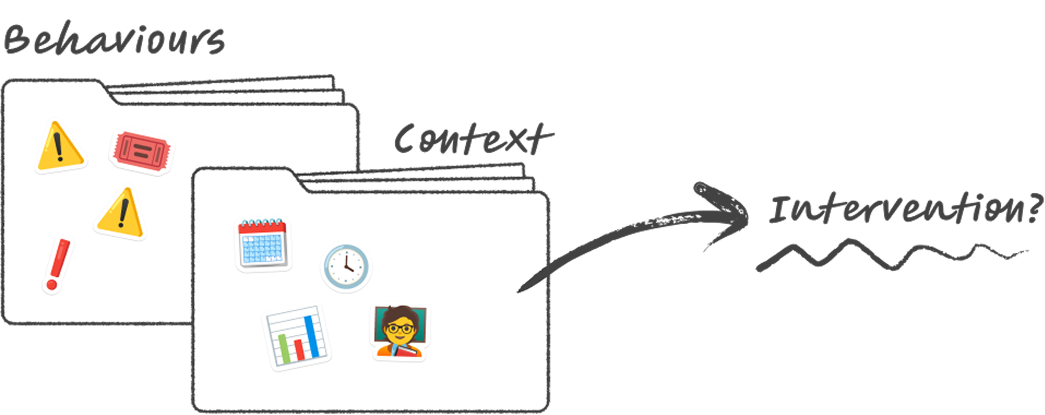
Over time, repeated infractions may lead to escalated discipline such as detention or suspension and to the student being moved to Tier 2 or 3.
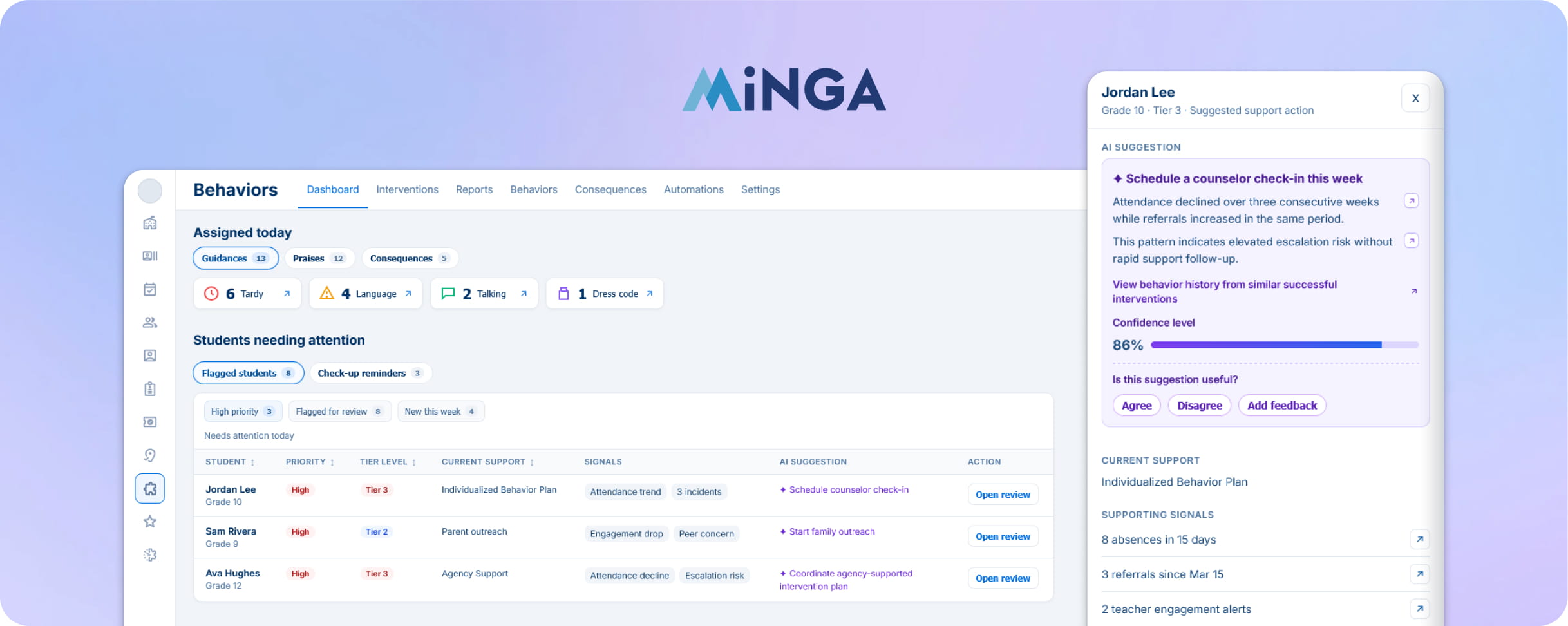
Without predictive modelling to identify escalating risk trajectories, educators must rely on intuition and hindsight to make intervention decisions.
1. Clarity over complexity
Surface insights in a way that is immediately understandable and actionable
2. Proactive over reactive
Focus on early signals, not just recorded incidents
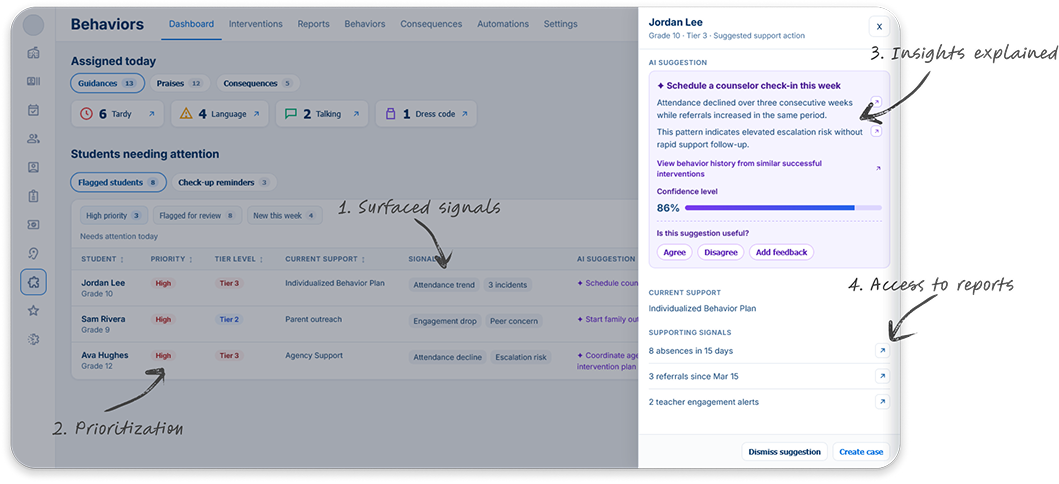
3. Explainability builds trust
Always show why a prediction or recommendation exists
4. Assist, don’t replace
Support educator decision-making and never automate discipline
Key insights 1: Volume
Too many small incidents → impossible to analyze manually
Key insights 2: Insight problem
Data exists → but no actionable intelligence
Key insights 3: Timing problem
Everything is reactive → no early intervention
Key insights 4: Teacher Burnout
Behaviour challenges → major driver of stress and burnout
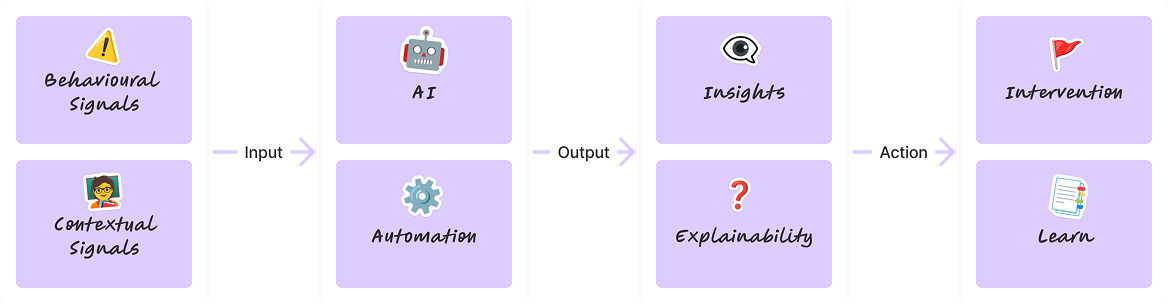
Because this feature supports sensitive student behavior decisions, AI suggestions should prioritize precision over recall.
The system only presents high-confidence recommendations, and is reinforced via user feedback and actions.
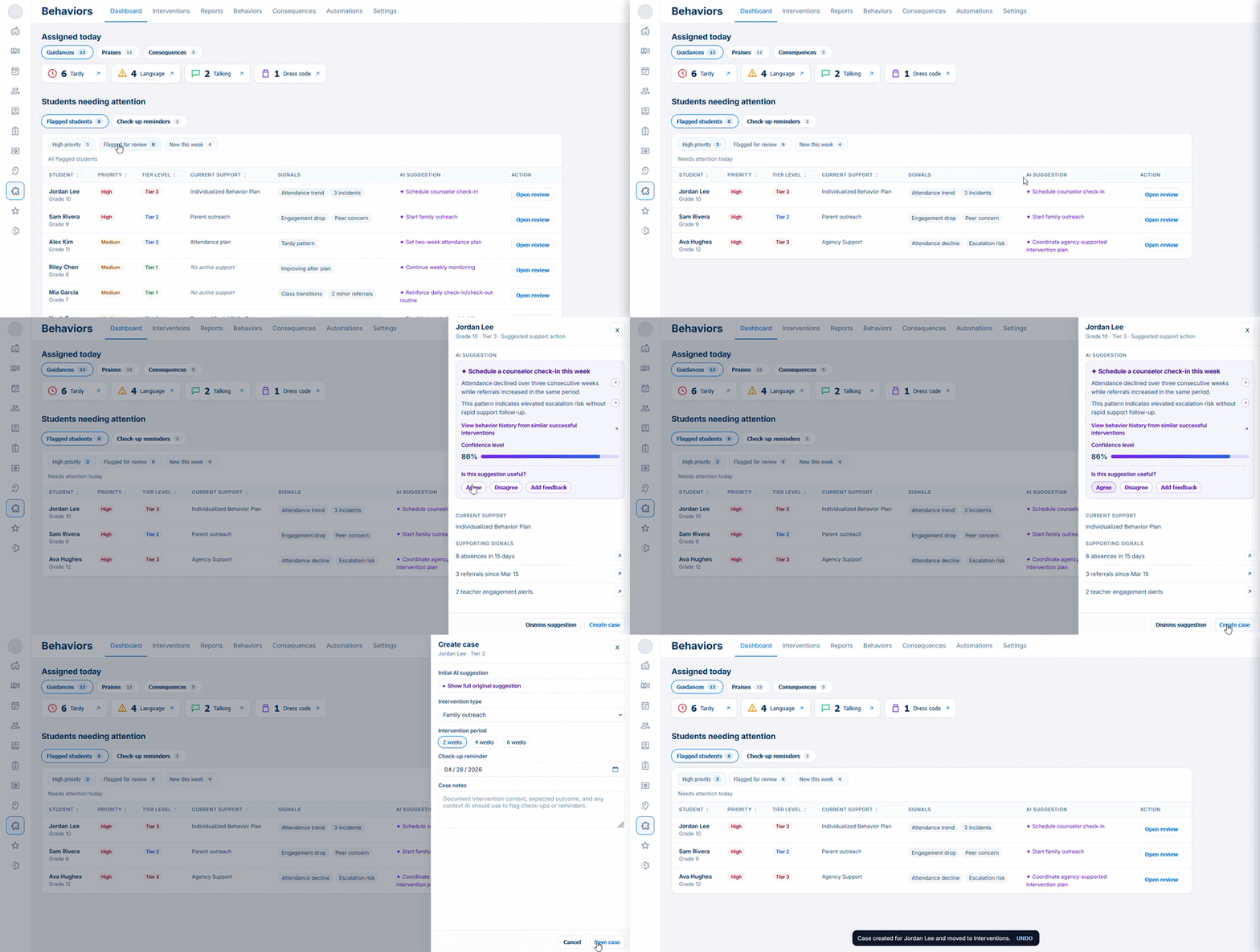
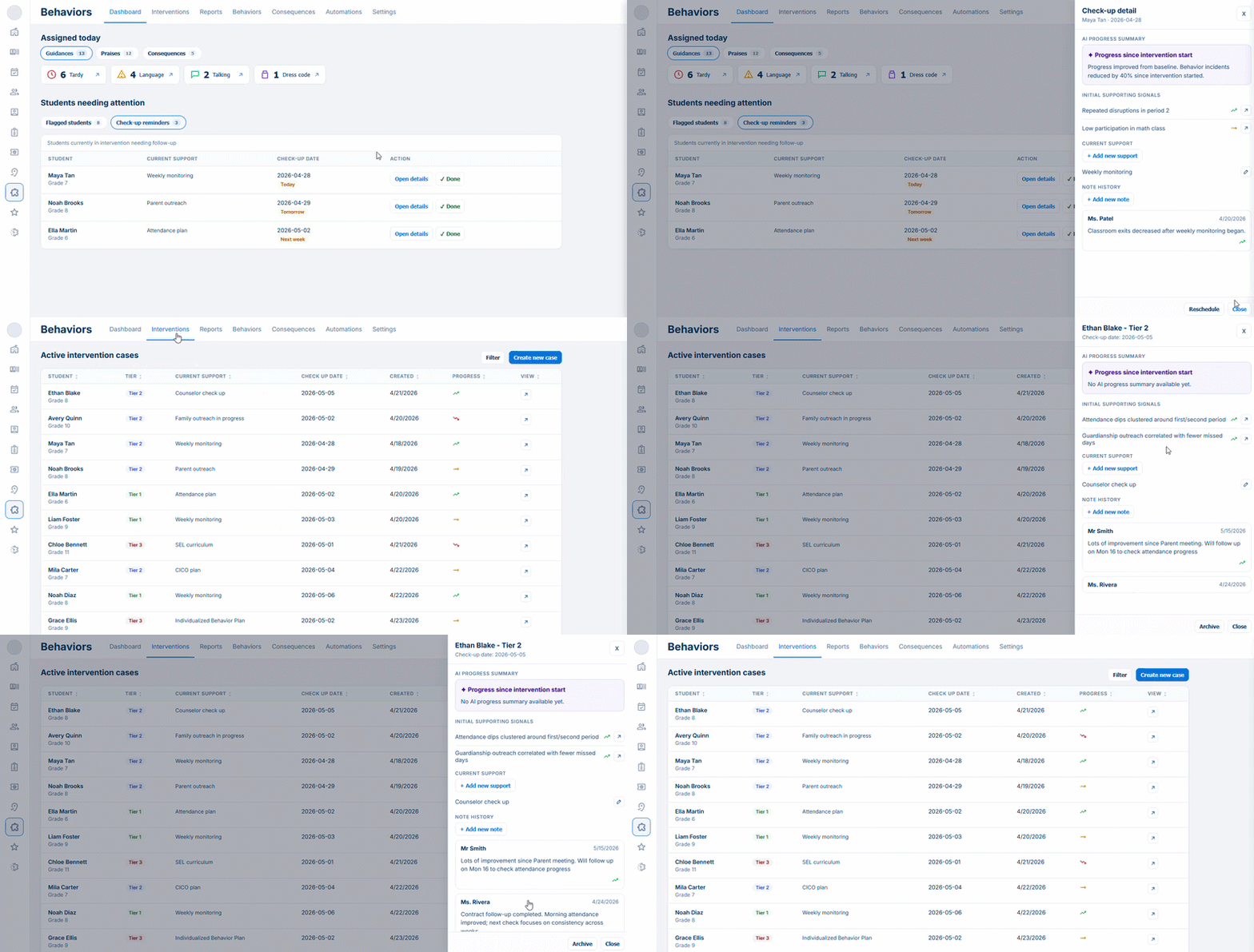
Because managing problematic behaviour is an on-going and dynamic process and needs to be tailored to the student’s situation.
Using AI in discovery
While AI-assisted research helped me rapidly explore the problem space and identify recurring patterns, it also highlighted the limitations of discovery without direct user interviews. If I continued this project, my next step would be validating assumptions with assistant principals to better understand how these workflows play out in real school environments.
Designing AI for trust, not automation
In a school setting, over-automation can quickly reduce trust, especially when decisions affect students directly. This shifted my focus away from prediction accuracy alone and toward explainability, confidence, and human control.
